
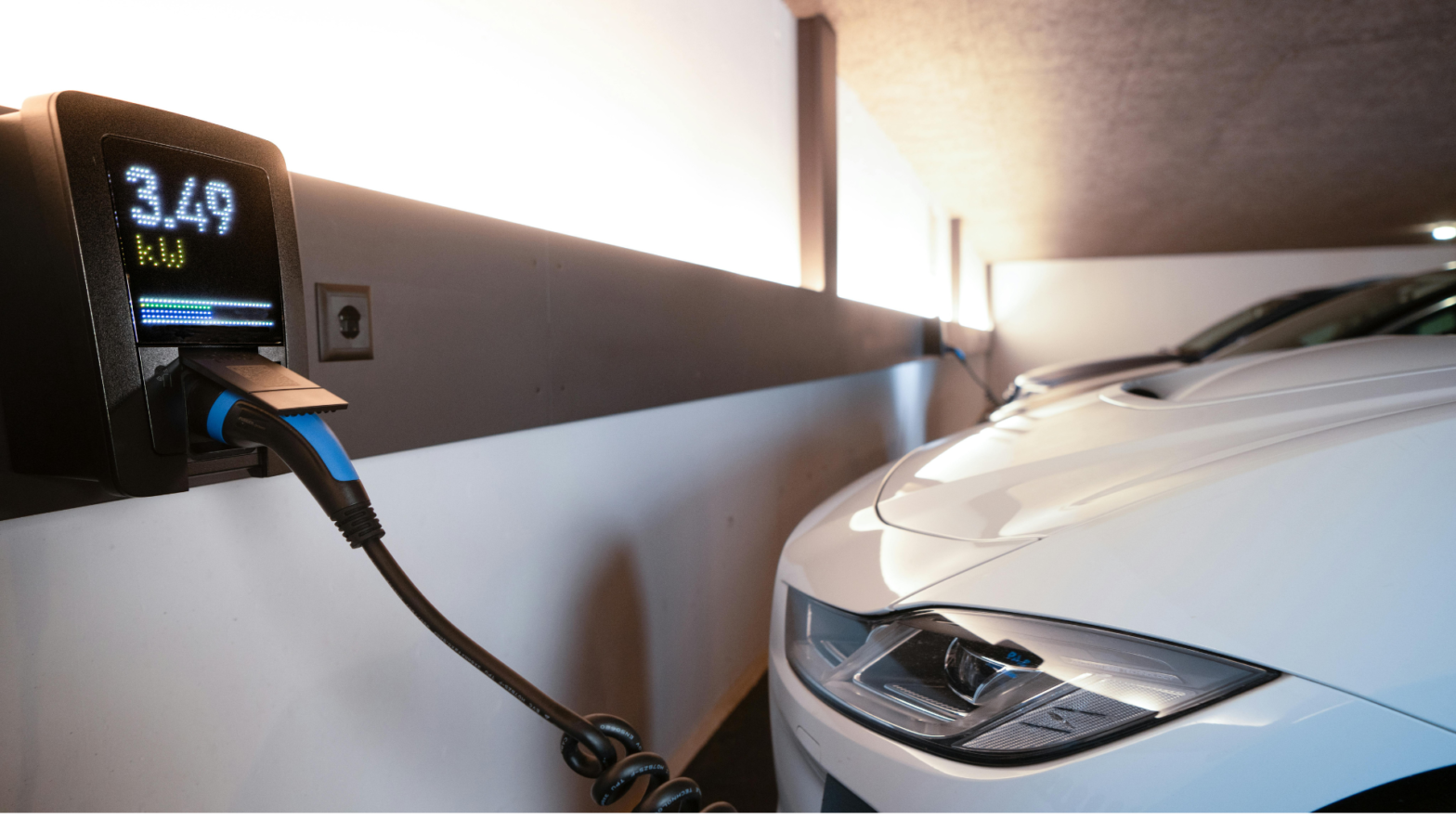
Condo owners across Livermore run into the same obstacle when they buy an electric vehicle. The parking space is theirs, the charger is affordable, and the association says no. California law addresses that situation directly, and the short version is that a blanket refusal is not something an HOA gets to issue. Understanding what the statute actually requires makes EV charger installation in a common interest development a process rather than a fight, and it also explains why an association is entitled to insist on professional EV charger installation rather than whatever the owner arranges.
SHORT ANSWER
California Civil Code section 4745 voids any provision in an association’s governing documents that effectively prohibits or unreasonably restricts installation of an EV charging station. The association may impose reasonable conditions, including architectural standards, use of a licensed contractor, permits, and proof of liability insurance. It must respond in writing, and an application not denied within 60 days is deemed approved unless the delay came from a reasonable request for more information. The owner pays for installation, electricity, maintenance, and any damage.
What follows is general information rather than legal advice. Owners and boards facing a dispute should consult an attorney or the association’s counsel.
What the Statute Actually Says
The core provision is straightforward. Any covenant, restriction, or condition in the governing documents that effectively prohibits or unreasonably restricts the installation or use of an EV charging station is void and unenforceable.
That does not mean an association has no say. It means the association’s authority runs to how the installation is done rather than whether it may happen at all. Reasonable restrictions are permitted, and a board acting in good faith has meaningful latitude around placement, appearance, contractor qualifications, and documentation.
The practical effect is that an association reviewing an EV charger request handles it the way it would handle any architectural modification application, and it must respond in writing.
The 60-Day Approval Clock
This is the provision most owners do not know about and most boards should.
If an application is not denied in writing within 60 days of receipt, it is deemed approved. The exception is narrow: the clock pauses only where the delay results from a reasonable request for additional information. Silence is not a denial, and an application left to sit becomes an approval by operation of the statute.
For owners, this makes the paper trail matter. Submit a complete application, document the date of receipt, and keep the correspondence. For boards, it makes timely written responses a governance obligation rather than a courtesy.
What an Association Can and Cannot Require
Conditions an association may impose
- Compliance with the association’s architectural standards for the installation.
- Use of a licensed contractor to perform the work.
- Obtaining applicable permits and approvals.
- Proof that the owner maintains a liability coverage policy, with a certificate provided within 14 days of approval and annually thereafter.
- Owner responsibility for costs, maintenance, repair, removal, and any resulting damage.
- Disclosure of the charging station and the owner’s obligations to prospective buyers.
Conditions that do not hold up
- A flat prohibition in the CC&Rs, which the statute renders void.
- Restrictions so burdensome they amount to a prohibition in practice.
- Indefinite delay, given the 60-day rule.
- Requiring the association be named as an additional insured on the owner’s policy, which California law now prohibits.
Insurance Requirements Have Changed, Twice
This is where most online guidance is out of date, including material still circulating in HOA management circles.
The original statute required owners to carry a one million dollar liability policy. That specific figure was removed in 2019, replaced by a requirement to maintain a liability coverage policy without a stated amount. Any board still demanding a million dollar policy on that basis is working from a superseded version of the law.
More recently, effective January 1, 2026, associations are prohibited from requiring that the association be named as an additional insured on the owner’s policy. The underlying obligations remain: the owner maintains coverage at all times, provides a certificate of insurance within 14 days of approval, and provides it annually after that. The additional insured demand is what changed.
One narrow exception is worth knowing. An owner using an existing standard alternating current power plug, meaning an ordinary household outlet rather than an installed charging station, is not required to maintain the liability policy.
Who Pays for What
The financial allocation is clear and generally favors the association.
The owner is responsible for the cost of installation, including any electrical work required to support it, for the electricity the station consumes, for maintenance and repair, for removal and restoration if applicable, and for damage arising from the station. Those obligations follow the unit, passing to successor owners along with the disclosure requirement.
Metering arrangements vary. Consumption may be handled through a submeter, a flat fee arrangement, or a utility-installed EV-dedicated time of use meter, which California law addresses separately and largely in parallel with the charging station provisions.
EV Charger Installation: The Electrical Reality Behind the Legal Right
Having the right to install is not the same as having the capacity to install, and this is where most condo projects actually stall.
Multifamily buildings in Livermore were generally built with service sized for the units and common loads that existed at the time. Adding chargers to a parking structure raises questions the statute does not answer:
- Where does the power come from? The owner’s unit panel, a house panel serving common areas, or a new dedicated service each carry different cost and metering implications.
- Is there capacity? A load calculation against the actual service determines what the building supports, and continuous loads like charging are counted at a higher rate than their nameplate suggests. The same calculation governs any residential electrical upgrade adding a large load.
- How does the conduit run? Routing from a panel to a parking space crosses common area, which is exactly why architectural standards exist.
- What happens when the second and third owners apply? A building that approves installations one at a time without a plan can exhaust capacity partway through.
That last point is the one boards should think about first. Assessing building capacity before the applications arrive, rather than after, is the difference between an orderly program and a sequence of disputes. It also frequently reveals that shared infrastructure serving multiple spaces costs less per unit than a series of individual runs, which is a commercial electrical planning exercise rather than a residential one.
For Owners, Boards, and Renters
Owners should read the CC&Rs first, submit a complete written application, note the date of receipt, use a licensed contractor, and keep insurance current. A complete application starting the 60-day clock is worth more than an argument.
Boards benefit from adopting an EV charging policy before requests arrive, arranging an electrical assessment of the building’s capacity, and responding in writing within the window. Refusing outright invites a dispute the association is unlikely to win.
Renters fall under a different provision of California law that addresses tenant requests for charging stations in leased premises, with its own conditions and limitations. The framework is similar in spirit but distinct in detail, so tenants should look to that section rather than to the HOA statute.
Key Takeaways
- Governing document provisions that prohibit or unreasonably restrict EV charging stations are void under California law.
- An application not denied in writing within 60 days is deemed approved, subject to a narrow exception.
- Associations may require architectural compliance, a licensed contractor, permits, and proof of insurance.
- The one million dollar coverage requirement was removed in 2019.
- Since January 1, 2026, associations cannot require being named as an additional insured.
- Owners bear installation, electricity, maintenance, removal, and damage costs, and the obligations pass to successors.
- Building electrical capacity, not the statute, is the practical constraint in most multifamily projects.
Frequently Asked Questions
Can my HOA simply say no to an EV charger?
Not as a blanket refusal. A provision that effectively prohibits installation is void under the statute. The association can impose reasonable conditions on how the installation is performed, but not refuse outright.
What if the board never responds to my application?
An application not denied in writing within 60 days of receipt is deemed approved, unless the delay resulted from a reasonable request for additional information. Documenting the submission date matters for exactly this reason.
Does my HOA still get to demand a million dollar policy?
No. That specific figure was removed from the statute in 2019. Owners must maintain a liability coverage policy and provide a certificate within 14 days of approval and annually thereafter, but the stated dollar amount is no longer in the law.
Who pays if the installation damages the building?
The owner. Responsibility for costs, maintenance, repair, and damage attaches to the charging station owner and passes to successor owners along with the disclosure obligation.
What if my parking space is a common area rather than deeded to me?
The statute addresses installation in common area and exclusive use common area, with the owner obtaining approval and agreeing in writing to specified conditions. The route differs from a deeded space, but the right to pursue installation still exists.
Our building does not have the electrical capacity. Now what?
That is an engineering question rather than a legal one. A load assessment establishes what the service supports, and options generally include shared infrastructure, load management to allow more chargers within existing capacity, or a service upgrade.
Conclusion
EV charger installation in a Livermore condo or HOA is rarely blocked by California law and frequently complicated by the building’s electrical system. Owners have a clear statutory right and clear obligations attached to it, associations have real authority over how work is performed, and both sides do better when the building’s capacity is understood before applications start arriving.
Golden Electrical Services installs EV charging equipment and assesses electrical capacity for homeowners, condo associations, and commercial properties in Livermore and throughout the Tri-Valley. Whether you are an owner preparing an application or a board planning for chargers across a building, reach out today to schedule an assessment.