
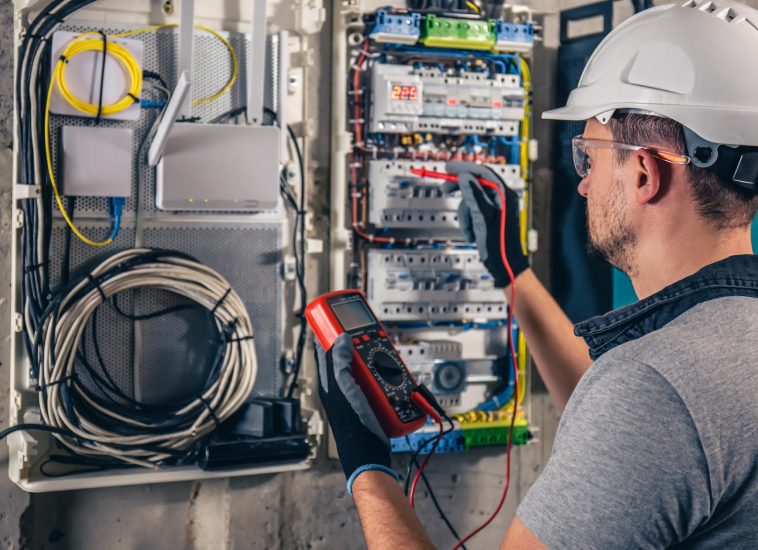
Flickering is one of the few electrical symptoms homeowners can see, which makes it easy to dismiss and easy to misread. Most of the time lights flicker for a reason that is annoying rather than dangerous. Occasionally the same symptom is the only warning a house gives before a connection fails somewhere it should not. Telling those apart is the entire job, and it is why a call about flickering usually becomes a broader conversation about residential electrical service once someone opens the panel.
SHORT ANSWER
If one fixture flickers, suspect the bulb, the fixture, or a dimmer and LED mismatch. If one room or circuit flickers, suspect a loose connection at a switch, outlet, or junction. If the whole house flickers, especially if lights brighten in one area while dimming in another, stop troubleshooting and call an electrician. That pattern can indicate a loose neutral, which damages appliances and creates a fire risk. Brief dimming when a large motor starts is normal.
Start With Where the Lights Flicker
Before considering causes, establish how widespread the problem is. This single observation narrows the possibilities more than anything else a homeowner can report.
- One fixture. The problem is almost always at that fixture, its bulb, or its switch.
- One room or one circuit. Points to a connection somewhere on that circuit, or to the circuit being overloaded.
- The whole house. Points to the panel, the service entrance, or the utility supply, and this is the category that deserves urgency.
- Only when something turns on. Usually a motor starting, which is often normal.
Noting when it happens is worth as much as noting where. Flicker that appears only on hot afternoons, only when the air conditioner cycles, or only after dark all point in different directions.
The Causes That Are Not Dangerous
Most flickering traces to one of these, and most of them are inexpensive to resolve.
Bulb and fixture issues. A bulb not fully seated, worn contacts in an old socket, or a low quality LED with a cheap internal driver will all flicker on their own.
Dimmer and LED mismatch. This is the most common cause in Livermore’s newer homes and in older ones that have been retrofitted. Older dimmers were built for incandescent loads and often have a minimum load requirement that a few LED bulbs cannot meet. Pairing a non-dimmable LED with a dimmer, or a dimmable LED with an incompatible dimmer, produces flicker, buzzing, or a limited dimming range. The fix is matching the dimmer to the bulbs rather than replacing bulbs repeatedly, and it is worth handling properly if the lighting ties into smart home controls, where compatibility gets more particular still.
Motor startup. Air conditioners, pool pumps, and well pumps draw a large surge for a fraction of a second when they start. A brief dip at that moment is expected. A dip that lingers, or one that has become more pronounced over time, is not.
The Pattern That Is Not Harmless
One symptom deserves separate treatment because it is genuinely serious.
If lights across the house flicker, and particularly if some lights brighten while others dim, that can indicate a loose or failing neutral connection. The neutral balances the two legs of a residential service. When it degrades, voltage stops dividing evenly, so some circuits receive more than they should and others receive less. Electronics and appliances fail on the over-voltage side, and the loose connection itself generates heat where it should not.
The failing connection can be at the panel, at the meter base, at the service entrance, or on the utility side of the connection. Locating it is not a homeowner task, and it should not wait for a convenient appointment.
Other symptoms in the same urgency category include a burning or fishy odor near outlets or the panel, a switch or receptacle that feels warm, discoloration around a device, buzzing from the panel, and flickering that coincides with breakers tripping.
Wiring and Panel Problems Behind Persistent Flicker
When bulbs and dimmers have been ruled out, the cause is usually a connection.
Loose terminations. Wires held by push-in connections at the back of a device rather than under a screw terminal loosen over time. Every heating and cooling cycle works the joint slightly, resistance rises, and the intermittent contact appears as flicker.
Aluminum branch wiring. Homes built in a window from the mid 1960s into the early 1970s were sometimes wired with aluminum branch circuits. Aluminum expands, contracts, and oxidizes differently than copper, and connections made with devices not rated for it degrade. Remediation uses specific approved connectors rather than simply retightening.
Overloaded circuits. A circuit carrying more than it was designed for produces voltage drop that shows up as dimming when a load starts. Common in kitchens and in older homes where one circuit now serves a room full of equipment that did not exist when the house was built.
Panel problems. Loose lugs, corroded bus connections, and failing breakers all cause flicker. Certain panels installed decades ago have documented histories of breaker and bus problems, and finding one of those brands during a service call changes the conversation from a repair to an evaluation.
Undersized service. A house running an EV charger, air conditioning, and modern appliances on service sized for a much smaller load will sag under peak demand. That is a capacity issue rather than a fault, and it resolves with a panel or service upgrade rather than with a repair.
What an Electrician Actually Checks
A competent diagnostic follows the evidence rather than replacing parts hopefully.
- Interview and scope. When it happens, where, what else is running, and what changed recently. Recent work in the house is frequently the answer.
- Voltage under load. Measuring at rest tells you little. Readings taken while loads cycle reveal drop and imbalance.
- Panel inspection. Checking lug torque, bus condition, breaker seating, and the neutral and ground terminations.
- Thermal scan. Loose connections generate heat before they fail, and an infrared scan finds them behind cover plates and inside the panel.
- Service entrance and meter. Inspecting the weatherhead, service conductors, and meter base for corrosion or damage.
- Device inspection. Pulling suspect switches and receptacles to check terminations and identify push-in connections or aluminum conductors.
- Load assessment. Where capacity is the suspected cause, a calculation against the actual service size rather than an estimate, which is the same groundwork behind any electrical service involving added load.
The order matters. Whole-house symptoms send an electrician to the panel and service first, while single-circuit symptoms send them to devices on that circuit. Skipping the scoping step is how people end up replacing three dimmers and still flickering.
Is It Your House or the Utility?
Not every flicker originates inside the building. Utility-side issues, work on nearby distribution equipment, and grid disturbances all produce flicker, and PG&E service events are a familiar part of life in the Livermore area.
A reasonable first check is whether neighbors are seeing the same thing at the same time. If the whole block flickers together, the cause is likely upstream. If it is only your house, it is your house. Either way, whole-house flicker with brightening and dimming warrants a call regardless of the suspected origin, because the failing connection can sit on either side of the meter and the consequences do not care which.
Commercial properties follow the same logic with higher stakes, since a flicker that signals a failing connection in a commercial electrical system can take equipment offline as well as create a hazard.
Key Takeaways
- Scope tells you almost everything: one fixture, one circuit, or the whole house.
- Dimmer and LED incompatibility is the most common harmless cause.
- Brief dimming when a large motor starts is normal, and prolonged or worsening dimming is not.
- Whole-house flicker with some lights brightening and others dimming can indicate a loose neutral and needs immediate attention.
- Push-in device connections and aluminum branch wiring are frequent sources of persistent flicker.
- Burning smells, warm devices, discoloration, or panel buzzing move any flicker into the urgent category.
- If the whole block flickers at once, the cause is likely on the utility side.
Frequently Asked Questions
Why do my LED lights flicker when dimmed?
Usually a compatibility problem. Many dimmers were designed for incandescent loads and have a minimum load the LEDs do not reach, or the bulbs are not dimmable. Matching the dimmer to the specific bulbs resolves it.
Is flickering ever an emergency?
Yes. Whole-house flickering, lights brightening and dimming in different areas, burning odors, warm switches or outlets, discoloration around devices, or buzzing from the panel all warrant an immediate call rather than a scheduled appointment.
My lights dim when the air conditioner starts. Is that a problem?
A brief dip at startup is normal motor behavior. It becomes a concern if the dip lasts more than a moment, has grown noticeably worse over time, or is accompanied by other symptoms.
Can flickering damage my electronics?
Voltage instability from a failing neutral can, because affected circuits may receive higher voltage than intended. Flicker from a dimmer mismatch does not carry that risk.
How do I know if my house has aluminum wiring?
Homes built between roughly the mid 1960s and early 1970s are the candidates. Conductor markings inside the panel or at devices identify it, and an electrician can confirm during an inspection. Remediation uses connectors approved for the purpose.
Will a panel upgrade stop the flickering?
It will if the cause is capacity, a failing panel, or loose connections at the panel. It will not if the cause is a dimmer mismatch or a loose connection at a fixture, which is why diagnosis should come before any upgrade is quoted.
Conclusion
When lights flicker in a Livermore home, the useful first step is observation rather than replacement. Note whether it is one fixture or the whole house, whether it tracks with a large appliance starting, and whether anything else has changed recently. Most causes are minor. The one that is not announces itself through whole-house symptoms, and it is worth acting on quickly.
Golden Electrical Services diagnoses and repairs flickering lights, failing connections, panel problems, and capacity issues for homes and businesses in Livermore and throughout the Tri-Valley area. If your lights have started flickering and you have not identified why, reach out today to schedule an assessment.