
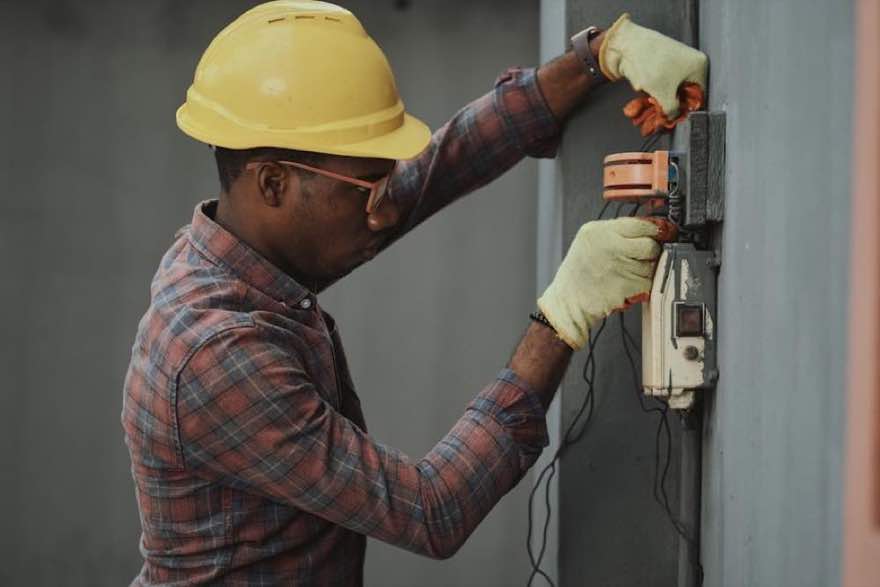
After a few years of public safety power shutoffs, most Livermore homeowners have stopped treating backup power as a luxury. The question is no longer whether to have it, but which kind. The whole-house generator vs battery backup decision usually gets framed as a product comparison, and the more useful framing is a usage question: how long do your outages last, what do you actually need running, and what will your electrical system support. That last one is the part people discover late, because both options depend on residential electrical work that has to happen before either unit is installed.
SHORT ANSWER
A generator is better for long outages and heavy loads. It runs as long as it has fuel and can carry air conditioning, well pumps, and electric ranges. A battery is better for short, frequent outages, and it is silent, emission free, and useful every day rather than only during an outage. Batteries paired with solar recharge daily, which closes much of the runtime gap. Whichever you choose, expect a load calculation and likely a critical loads subpanel, and confirm your main panel can support the connection.
Whole-House Generator vs Battery Backup: How They Differ
A standby generator is permanently installed outside on a pad, connected to natural gas or propane, and wired through a transfer switch that starts it automatically when the utility drops. It produces power for as long as fuel keeps arriving, which for a natural gas connection is effectively indefinite.
A home battery stores electricity and releases it when the grid goes down. There is no fuel, no combustion, no noise, and no exhaust. Capacity is finite, so runtime depends on how much you stored and how much you draw. Paired with solar, it recharges each day, which changes the calculation considerably.
One difference matters more than the specifications suggest. A generator takes a few seconds to start, so you experience a brief outage before it picks up. A battery switches over fast enough that most people never notice, which matters if you work from home or have equipment that objects to losing power.
Runtime, and Why It Is the Deciding Factor
This is where the two genuinely separate.
Public safety power shutoffs are not brief. When PG&E de-energizes lines ahead of high wind and fire risk, the outage can run for days rather than hours. A generator handles that without much thought. A battery alone, without solar, is generally sized in hours of essential loads, not days.
Add solar and the picture changes. The battery carries the house overnight and recharges the next day, which for a multi-day event can be sufficient depending on what you are running. What it will not comfortably do is carry central air conditioning through a Livermore summer afternoon for very long, because cooling is a large continuous load and it drains storage quickly.
So the honest test is not which technology is better. It is what your outages have actually looked like, and what you are unwilling to lose during one.
What Each One Is Better At
A generator makes more sense when:
- Outages in your area tend to last a day or more.
- You need to run large loads such as central air conditioning, a well pump, or an electric range.
- You want whole-house coverage rather than selected circuits.
- You have natural gas service available at the property.
A battery makes more sense when:
- Outages are short but frequent, and instant switchover matters.
- Noise or emissions are a concern, whether from neighbors, a homeowners association, or local rules.
- You already have solar, or plan to add it.
- You want the system to do something on the other 360 days of the year.
That last point deserves attention, because it is the one most comparisons skip. A generator sits idle until the power fails. A battery works daily under time-of-use rates, storing energy when it is cheaper and discharging when it is expensive. In California, where export rates for solar were substantially reduced under the current net billing structure, storing your own production rather than sending it to the grid has become a considerably stronger argument than it was a few years ago.
The Practical Trade-Offs Nobody Mentions
Noise. A running generator is audible, and it will be running for the entire outage, including overnight. On a typical Livermore lot, your neighbors will hear it too. Batteries are silent.
Maintenance. Generators are engines. They need periodic servicing, they run automatic exercise cycles, and a unit that has not been maintained is a unit that may not start when you need it. Batteries have no moving parts and require essentially no routine maintenance, though they do degrade over their service life.
Siting. A generator needs a pad, clearance from windows and openings, and a gas connection. A battery needs wall or floor space with appropriate clearances and temperature considerations, which in a hot garage is worth thinking about. Either way the connection runs back to your panel, which is where a commercial or residential electrical assessment starts.
Fuel. Natural gas means uninterrupted supply in most scenarios. Propane means a tank, and a tank means monitoring the level and arranging refills during an event when everyone else is doing the same.
Incentives. Battery storage has historically been eligible for federal and California incentive programs, and generators generally are not. Program terms and availability change, so confirm what currently applies before building it into your budget.
The Electrical Work Both Options Require
This is the part that gets discovered after the equipment has been chosen, and it applies regardless of which direction you go.
- A load calculation. Before anything is specified, someone has to establish what your home actually draws and what the backup source needs to carry. Guessing at this is how systems end up undersized.
- Panel capacity. Your main panel has to accommodate the connection, and older panels frequently cannot. Homes on service sized decades ago run into this immediately, particularly if an EV charger is already in the picture.
- A critical loads subpanel. Most backup installations separate essential circuits, refrigeration, some lighting, a few outlets, medical equipment, onto their own panel. This is close to mandatory for batteries and common with generators, and it is the piece homeowners rarely anticipate.
- Transfer equipment. Backup power has to be isolated from the utility, both for safety and by code. This is not optional and it is not a homeowner task.
- Permits and utility coordination. Both paths involve permitting, and battery systems additionally involve an interconnection process with the utility.
The sequence that avoids rework is straightforward. Assess the electrical system first, decide what has to stay running, then choose the equipment that fits both. Doing it in the reverse order is how people end up with a unit that their panel cannot support.
What About Both?
Some homes end up with both, and it is not as redundant as it sounds. The battery handles the frequent short outages silently and does daily rate work, while the generator covers extended multi-day events. It costs more, and for households with medical equipment or work that genuinely cannot stop, some homeowners consider it worthwhile.
If you are planning in stages, get the electrical infrastructure right at the first installation. A critical loads subpanel and adequate service capacity serve either technology, so doing that work once rather than twice is the saving worth capturing.
Key Takeaways
- Generators win on runtime and heavy loads. Batteries win on silence, instant switchover, and daily usefulness.
- Public safety power shutoffs can last days, which favors generators or solar paired with storage.
- Central air conditioning drains battery storage quickly, which matters through a Livermore summer.
- Batteries do daily work under time-of-use rates, while a generator sits idle between outages.
- Generators need fuel, servicing, siting clearances, and produce noise for the entire outage.
- Both require a load calculation, adequate panel capacity, transfer equipment, and usually a critical loads subpanel.
- Assess the electrical system before choosing equipment, not after.
Frequently Asked Questions
How long will a home battery actually last in an outage?
It depends entirely on capacity and draw. Running essentials such as refrigeration, lighting, and outlets stretches much further than running central air conditioning. Without solar to recharge it, plan in hours rather than days.
Can a generator power my whole house including the air conditioning?
A properly sized standby unit can, which is one of its main advantages. Sizing follows a load calculation of what you actually need running, and that calculation is also what tells you whether your panel can support the connection.
Do I need solar to make a battery worthwhile?
Not strictly, since a battery charges from the grid and can be used for time-of-use savings and short outages. But solar is what allows it to recharge during an extended outage, which is the difference between hours of backup and ongoing backup.
What is a critical loads subpanel?
A separate panel carrying only the circuits you want running during an outage. It lets a limited backup source cover what matters instead of attempting the whole house, and it is a common requirement in battery installations.
Will my existing electrical panel support backup power?
Sometimes, and often not without changes. Older panels, panels already at capacity, and homes that have added an EV charger frequently need upgrading first. A load calculation gives the answer before you commit to equipment.
Are there rules about generator noise or placement in Livermore?
Placement is governed by clearance requirements from windows, doors, and property lines, and noise may be subject to local ordinances or homeowners association rules. Confirm both before selecting a location.
Conclusion
The whole-house generator vs battery backup question comes down to the outages you actually experience and the loads you refuse to lose. Long shutoffs and heavy loads point toward a generator. Short outages, quiet operation, and daily value point toward a battery. Solar shifts a battery much closer to a generator on runtime.
Whichever way it goes, the electrical groundwork is the same, and it is the part that determines what is realistic. Golden Electrical Services handles load calculations, panel and service upgrades, subpanels, and the electrical work that backup power depends on, for homes and businesses across Livermore and the Tri-Valley. If you are weighing your options, reach out today and we can start with what your panel will actually support.