
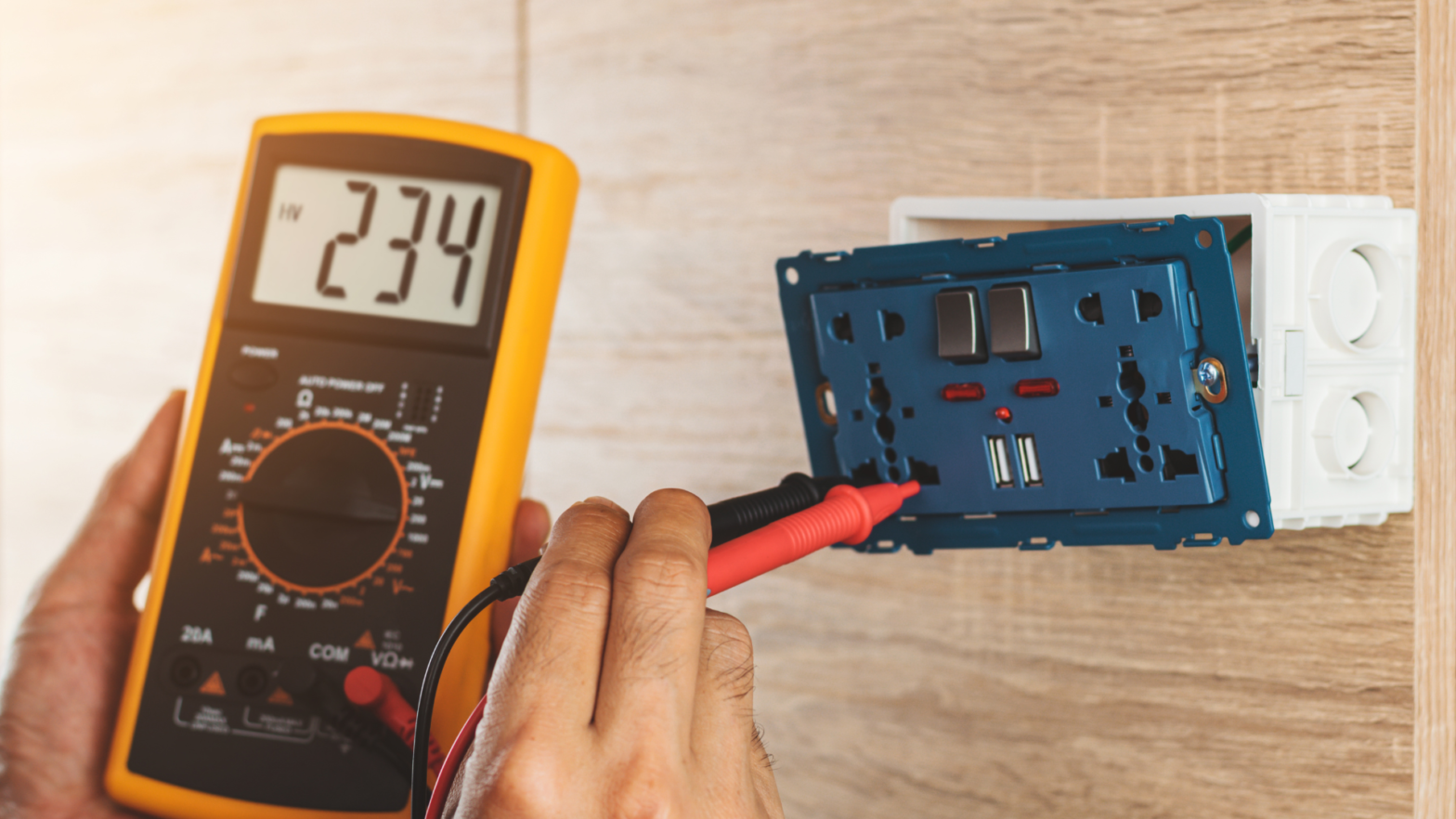
Electrical systems rarely fail all at once. They give warnings for months, sometimes years, and the warnings are easy to normalize. A switch plate that runs a little warm becomes something you stop noticing. An outlet that will not hold a plug becomes the one you avoid. Home wiring problems are unusual among household faults in that ignoring them does not just cost money later, it raises risk now, and most of the signs below take seconds to check. Recognizing them early is the difference between a targeted electrical repair and a much larger project.
SHORT ANSWER
Stop and call an electrician today if you notice a burning smell, scorch marks, a warm or discolored outlet or switch plate, buzzing or crackling from a device or panel, or any shock or tingle from a switch or appliance. Schedule service soon for repeated breaker trips, outlets that no longer grip a plug, two-prong outlets, or visible cloth-insulated, knob-and-tube, or aluminum branch wiring. The last group is not an emergency, but it does define what your system can safely carry.
1. Warm or Discolored Outlets and Switch Plates
An outlet or switch should be at room temperature. Warmth means electrical resistance is generating heat somewhere behind the plate, usually at a loose or degraded connection or on a circuit carrying more than it should.
Discoloration is the same story one stage further along. Yellowing, browning, or a faint smudge pattern around the slots indicates heat has already been present for a while. Neither is something to monitor. Heat at a connection is how fires start inside walls, where nothing is visible until it is well established.
2. A Burning Smell or Scorch Marks
This is the sign that should stop whatever you are doing.
A sharp, acrid, plastic-like odor near an outlet, switch, or panel indicates insulation or device components are overheating. Visible scorching around a receptacle or on a panel cover means arcing has occurred. Shut off the circuit at the breaker if you can do so safely, stop using the area, and arrange service immediately.
The smell sometimes appears without an obvious source, which does not make it less serious. It means the heat is somewhere you cannot see.
3. Buzzing, Sizzling, or Crackling
Electricity should be silent. Sound from a switch, outlet, or the panel itself generally indicates arcing, a loose connection, or a failing device.
A buzzing panel deserves particular attention, because the connections inside carry the whole house. Sound from a dimmer is sometimes a lamp and dimmer compatibility issue rather than a wiring fault, but the only way to distinguish them is to have it looked at rather than assumed.
4. A Shock or Tingle From a Switch or Appliance
Any shock, however mild, is a serious finding.
A tingle when touching a switch plate, appliance housing, or faucet suggests current is present where it should not be, which typically points to a grounding problem, a wiring fault, or an appliance failure energizing metal parts. What feels like a minor nuisance under dry conditions can be considerably more dangerous under other conditions.
Stop using the device or fixture involved and have the circuit tested. This is not a wait-and-see item.
5. Breakers That Trip Repeatedly, or a Fuse Box
A breaker tripping occasionally under genuine overload is protection working correctly. Tripping repeatedly is information.
If a breaker trips when several appliances run together, the circuit is overloaded and needs load redistributed or a dedicated circuit added. If it trips with little connected, or will not reset, the problem is a fault on the circuit or the breaker itself. Either way, repeatedly resetting without finding the cause is the wrong response.
A fuse box rather than a breaker panel tells you the service predates modern practice by decades. It is not automatically unsafe, but it indicates a system designed for a household load that no longer resembles how the house is used, and it is worth a full evaluation.
6. Two-Prong Outlets, or Three-Prong Outlets Without a Ground
Two-prong receptacles mean the circuit has no equipment ground, which matters for anything with a metal case and for sensitive electronics.
The more concerning version is a three-prong outlet on an ungrounded circuit. Someone replaced the receptacle without adding a ground, so the outlet now accepts a grounded plug while providing no ground path at all. It looks correct and is not. Where an existing ungrounded circuit cannot practically be rewired, there are code-recognized approaches involving ground fault protection and specific labeling, but simply swapping the receptacle is not one of them.
An inexpensive outlet tester will identify ungrounded and reverse-wired receptacles in a few minutes.
7. Cloth Insulation, Knob and Tube, or Aluminum Branch Wiring
Look in the attic, the garage, the basement, and inside the panel cover if it is already off. What you see there tells you roughly what era the system belongs to.
Cloth-insulated wiring from the mid-century era has rubber or fabric insulation that becomes brittle and crumbles with age and heat, particularly in hot attic space.
Knob and tube is older still, has no equipment ground, and was never designed to sit in contact with modern insulation. It also complicates insurance in some cases.
Aluminum branch circuit wiring was used in homes built roughly between the mid 1960s and early 1970s. Aluminum expands, contracts, and oxidizes differently than copper, and connections made with devices not rated for it degrade over time. Remediation requires connectors approved for the purpose rather than simply retightening terminals.
None of these is an emergency by itself. All of them define what your wiring can safely support, which matters increasingly as households add load.
What Makes Home Wiring in Livermore Different
Two local factors shape how this plays out here.
Housing age. Livermore’s older neighborhoods include homes wired for a fraction of today’s demand, and tract construction from the late 1960s and early 1970s falls squarely in the aluminum branch wiring window. Newer subdivisions have adequate service but were not built anticipating EV charging. Commercial buildings of the same vintage face the same constraint at larger scale.
Heat. Sustained summer temperatures raise ambient conditions in attics and garages well above what the rest of the house sees. Heat accelerates insulation degradation, and it is why attic runs and equipment in unconditioned space tend to show their age first.
Load growth compounds both. A home adding air conditioning, a heat pump, or EV charging is asking more of wiring that was specified for a different era, and a load calculation is what establishes whether that is reasonable.
What Needs Attention Today and What Can Wait
Today: burning smells, scorch marks, warm or discolored devices, buzzing from the panel, any shock or tingle, or a breaker that will not reset.
Soon: repeated tripping, loose receptacles that no longer grip a plug, ungrounded three-prong outlets, and reliance on extension cords for permanently placed equipment.
Plan for it: two-prong outlets, a fuse box, cloth or knob-and-tube wiring, aluminum branch circuits, and capacity limits that surface when you try to add something.
Repair, Partial Rewire, or Whole House
Not every finding leads to rewiring the house.
Isolated problems with identifiable causes, a failed device, one bad connection, a single overloaded circuit, are repairs. Rooms that have outgrown their original wiring, kitchens in particular, are frequently handled as targeted partial rewires rather than whole-house projects. Whole-house rewiring belongs to systems that are failing generally rather than at specific points: widespread degraded insulation, no grounding anywhere, or a service that cannot support how the house is actually used.
The honest test is whether you are fixing a fault or repeatedly fixing symptoms of a system at the end of its life. An electrical assessment establishes which situation you are in before money goes toward either.
Key Takeaways
- Warmth or discoloration at a device means heat is being generated behind the plate.
- Burning smells and scorch marks are immediate-action items, not monitoring items.
- Any shock or tingle indicates current where it should not be and needs testing.
- Repeated tripping is information about the circuit, not a reason to keep resetting.
- A three-prong outlet on an ungrounded circuit looks correct and provides no protection.
- Cloth, knob-and-tube, and aluminum branch wiring define what the system can safely carry.
- Livermore summer heat accelerates insulation degradation in attics and garages.
- Whole-house rewiring is for systems failing generally, not for isolated faults.
Frequently Asked Questions
Is a warm outlet always a problem?
Warmth at the outlet itself is. A plug-in transformer or charger generating its own heat is different from the receptacle body being warm. If the plate or the receptacle is warm to the touch, have it checked.
How can I tell if my outlets are actually grounded?
An inexpensive plug-in outlet tester indicates ungrounded and reverse-wired receptacles. It will not diagnose everything, but it quickly identifies three-prong outlets with no ground behind them.
Does aluminum wiring have to be replaced?
Not necessarily. The connections are the problem more than the conductor, and remediation using connectors approved for aluminum-to-copper transitions is a recognized approach. An evaluation determines whether that is sufficient in a given home.
My breaker keeps tripping. Can I just use a bigger one?
No. Breaker size is determined by the wire it protects, so a larger breaker removes protection while leaving undersized wire in place. The correct fix is redistributing load or adding a circuit.
Will a home inspection catch failing wiring?
It will catch visible and testable issues, which is valuable. It will not see conditions inside walls, so a house that passes inspection can still have connections degrading where nobody can look.
How much of my house needs rewiring if one circuit is bad?
Often just that circuit. The question is whether the fault is isolated or representative of the whole system, which is what an assessment establishes before committing to scope.
Conclusion
Failing home wiring announces itself through heat, sound, smell, and small shocks long before anything dramatic happens. The signs in the first four sections warrant a call the day you notice them. The last three are slower, and they matter because they determine what your house can safely carry as you keep adding to it.
Golden Electrical Services diagnoses and repairs wiring faults, upgrades panels, and rewires kitchens and whole homes across Livermore and the Tri-Valley. If something on this list sounds familiar, reach out today to schedule an assessment.