
8 Ways to Prepare Your Livermore Home’s Electrical System for a PG&E Power Outage
Most outage preparation advice is about flashlights and bottled water, which is fine as far as it goes and has nothing to do with your electrical system. A power outage puts specific demands on a house, and the damage people actually experience tends to happen either when the power goes out or when it comes back, not during the dark part in between. The items below are the electrical side of readiness, and several of them are worth handling before the next public safety power shutoff rather than during one. Most involve your panel, which is why a residential electrical assessment is a reasonable starting point.
SHORT ANSWER
Know where your main disconnect is and make sure the panel is labeled. Decide in advance which circuits genuinely must run. Install whole-house surge protection, because restoration surges damage more equipment than outages do. Have the panel and its connections inspected. Never connect a portable generator to a household outlet. Charge the EV ahead of a forecast shutoff. Know what to unplug. And if you want permanent backup, decide deliberately rather than during an outage.
1. Know Your Main Disconnect and Label the Panel
In an emergency you may need to kill power to the whole house or to one circuit quickly. That is difficult if the panel directory was last updated by the previous owner, or never.
Find the main breaker, confirm it operates, and map the circuits properly. Walk the house with someone flipping breakers and write down what actually goes dark rather than what the label claims. It takes an afternoon once and pays off every time something goes wrong afterward.
Note the panel’s location for anyone else in the household, and keep the area in front of it clear. Storage stacked against a panel is a code issue and a practical one.
2. Make a Critical Loads List Before You Need One
Write down what genuinely has to keep running. Refrigeration, any medical equipment, a well pump if you have one, networking equipment if someone works from home, and enough lighting to move around safely.
This list does two things. It tells you how long you can tolerate an outage, and it becomes the specification if you later add backup power, because a critical loads subpanel is built around exactly this list. Making it while the lights are on produces a better list than making it by flashlight.
3. Install Whole-House Surge Protection
This is the most overlooked item on the list and the one that prevents the most expensive damage.
The outage itself rarely harms anything. Restoration can. When power returns, the grid can deliver voltage transients, and a house full of electronics, appliance control boards, HVAC equipment, and an EV charger has a lot of sensitive equipment exposed to them. Repeated shutoff and restoration cycles mean repeated exposure.
A whole-house surge protective device installed at the panel handles the large events entering on the service. Point-of-use protection at sensitive electronics handles what gets through. The two work together rather than substituting for each other.
Worth knowing: these devices have a finite service life and absorb damage over time. Many have status indicators, and one that has taken a significant hit needs replacing rather than being assumed good.
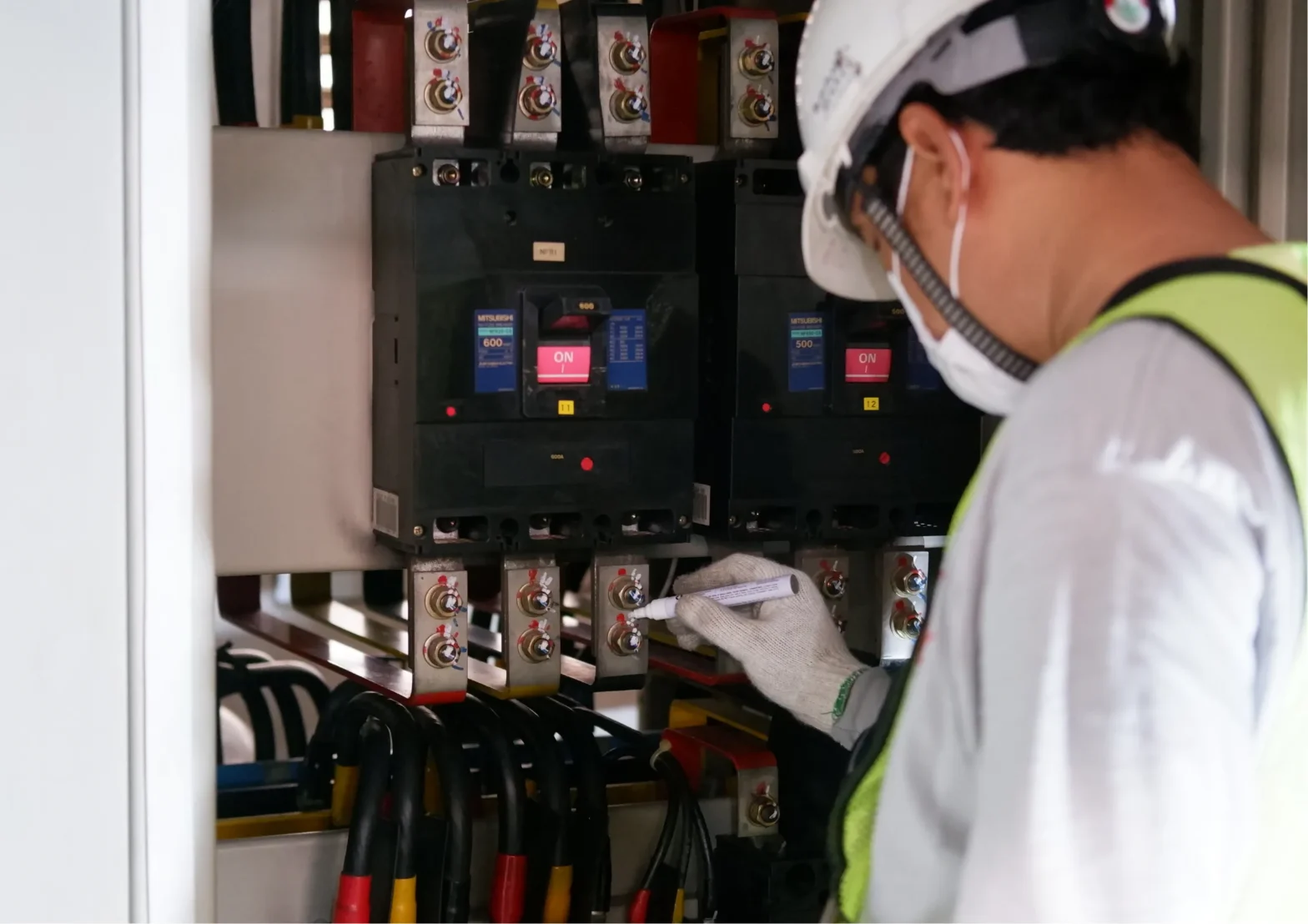
4. Have the Panel and Its Connections Inspected
Outages and restorations stress a panel, and loose or corroded connections generate heat under load.
An inspection covers lug torque, bus condition, breaker seating, the neutral and ground terminations, and whether the service has capacity for how the house is actually used now. If you have added air conditioning, a heat pump, or EV charging since the panel was installed, that last point matters more than it used to.
This is also when obsolete equipment gets identified. Some panels installed decades ago have known issues, and finding that out during a planned inspection is better than during an event.
5. Never Backfeed a Portable Generator
If you own or are considering a portable generator, this is the most important thing on this page.
Connecting a portable generator to a household outlet, typically a dryer or range receptacle using a double-ended cord, energizes your home’s wiring from the wrong direction. It bypasses the main breaker, so there is no overcurrent protection. Worse, it can push power back through the utility transformer onto the lines outside at dangerous voltage, which puts utility crews working to restore your neighborhood at serious risk.
The correct approach is a properly installed transfer switch or interlock kit, wired by an electrician and permitted. That isolates your home from the utility so power can only flow one direction.
Two other portable generator rules: run it outdoors only, well away from windows, doors, and vents, and never in a garage even with the door open, because carbon monoxide kills people every year in exactly that scenario. And size the extension cords properly for the load and distance.
6. Plan EV Charging Around a Forecast Shutoff
Public safety power shutoffs come with advance notice, and an electric vehicle is both a vulnerability and an asset.
Charge to full before a forecast event. An EV with a full battery is transportation and, on some vehicles, a substantial power source for essential loads. Confirm what your specific vehicle and equipment support, since capability varies considerably and some configurations require additional hardware and electrical work to connect safely.
Also know that a charger will not operate during an outage without backup power feeding it, which surprises people who assumed otherwise.
7. Know What to Unplug and What to Leave On
When the power goes out, unplug or switch off sensitive electronics and anything with a motor or compressor that could be damaged by an abrupt restoration. Computers, televisions, and audio equipment are the obvious candidates.
Leave one light switched on so you know when power has been restored, which sounds trivial and is genuinely useful during an extended event.
Turn off or unplug space heaters and anything that generates heat, because a device that was on when power failed will come back on unattended, possibly hours later and possibly overnight.
8. Decide on Permanent Backup Deliberately
If outages have become frequent enough to justify permanent backup, make that decision with a plan rather than in the middle of an event.
Whichever direction you go, the electrical groundwork is the same: a load calculation establishing what must run, confirmation that your panel and service can support the connection, a critical loads subpanel in most cases, transfer equipment, and permitting. That work is what determines what is actually feasible, and it is worth doing before equipment is selected rather than after.
During and After the Power Outage
A few practical notes for the event itself.
Use battery lighting rather than candles. Keep refrigerator and freezer doors closed as much as possible. If you are running a portable generator, keep it dry and do not refuel it while it is hot or running.
When power returns, bring large loads back gradually rather than all at once. Check that GFCI and AFCI devices have reset, since some trip during restoration and stay tripped. Reset clocks and timers, including any on irrigation and smart home equipment, which frequently loses schedules. And if anything smells hot, looks scorched, or will not reset, stop and have it looked at rather than forcing it.
Key Takeaways
- Restoration surges cause more equipment damage than outages themselves.
- Whole-house surge protection and point-of-use protection work together, not as substitutes.
- Surge protective devices wear out and need periodic checking or replacement.
- An accurate panel directory is far more useful during an emergency than after one.
- A critical loads list becomes the specification for any future backup system.
- Backfeeding a generator through a household outlet endangers utility crews and removes overcurrent protection.
- Portable generators run outdoors only, never in a garage, because of carbon monoxide risk.
- EV chargers do not operate during an outage without backup power feeding them.
Frequently Asked Questions
Does an outage itself damage appliances?
Usually not. The damage more often comes when power returns, through voltage transients on restoration. That is the argument for surge protection rather than for simply riding out the dark.
Is a power strip enough protection?
For an individual device it helps, and it will not stop a large surge arriving on the service. A whole-house device at the panel handles the big events, with point-of-use protection catching what gets past it.
Can I plug a generator into my dryer outlet?
No. That backfeeds your home’s wiring without overcurrent protection and can energize utility lines outside, endangering crews. A transfer switch or interlock installed by an electrician is the correct method.
Why did my GFCI outlets stay dead after the power came back?
Some GFCI and AFCI devices trip during restoration and do not reset themselves. Check and reset them before assuming a circuit has failed.
Will my EV charger work during an outage?
Not unless it is being fed by backup power. The charger requires grid or backup supply to operate, so charging ahead of a forecast shutoff is the practical approach.
How do I know if my panel can handle backup power?
Through a load calculation and inspection. Capacity, panel condition, and available space all factor in, and older panels frequently need upgrading before backup equipment can be connected.
Conclusion
Preparing for a PG&E power outage is mostly about the things you do beforehand. Surge protection, a panel that has been inspected and labeled, a list of what genuinely has to run, and a safe plan for any generator you own will do more for you than anything you can arrange once the lights are already off. The items that need an electrician are worth scheduling in advance, because everyone calls at once when a shutoff is forecast.
Golden Electrical Services installs surge protection, upgrades panels and services, and handles the electrical work behind backup power for homes and businesses across Livermore and the Tri-Valley. If you want your system looked at before the next shutoff, reach out today to schedule an assessment.